The average young child in Thailand now spends more than two hours a day on a screen — well above the one-hour maximum the WHO recommends for under-5s (Department of Health, Thailand).
Finnish children who spent that same time playing in forest soil showed measurably stronger immune systems within a month (University of Helsinki, Roslund et al., 2020).
Same hours. Very different childhood.
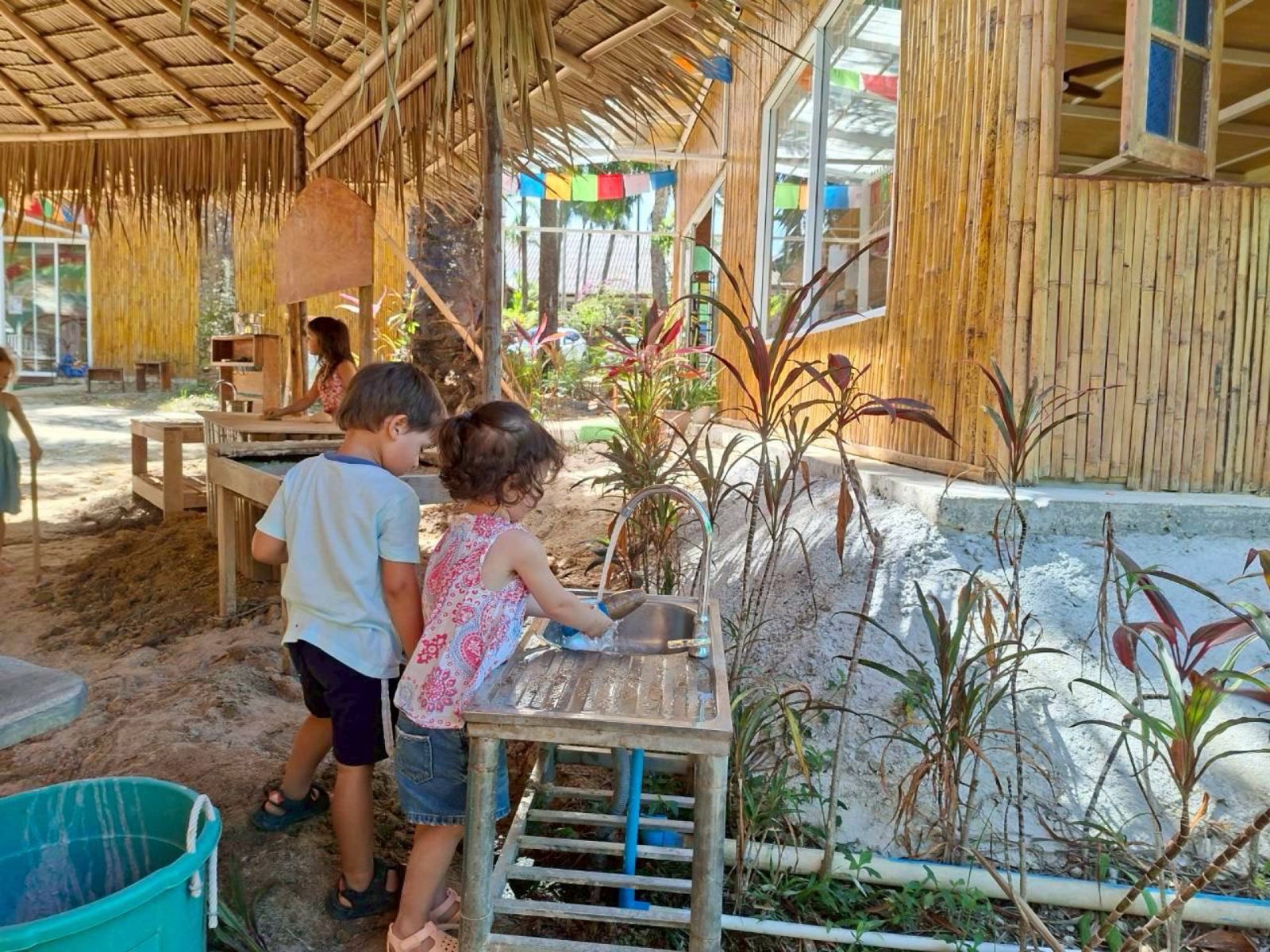
What the Research Shows
1. Soil contact trains the immune system. Children who played daily on forest floor material showed significantly more diverse gut and skin bacteria and better-regulated immune markers within 28 days (Roslund et al., Science Advances, 2020).
2. A soil bacterium acts like a natural mood-lifter. Mycobacterium vaccae, found in ordinary garden soil, triggers serotonin release in the brain — the same pathway targeted by antidepressants (Lowry et al., Neuroscience, 2007).
3. Nature play calms the nervous system. Time in green environments shifts children's nervous systems toward "calm mode" — lower stress markers, better self-regulation (Schmidt et al., Frontiers in Psychology, 2021).
4. Loose parts beat apps for language and creativity. Open-ended play with sticks, mud, water, and stones generates richer conversation and more creative problem-solving than structured toys or screen-based games. There is no app equivalent of negotiating who holds the hose.
5. Outdoor children sleep better. Daylight exposure anchors the circadian rhythm; physical exertion does the rest. Parents consistently report deeper, earlier sleep during camp weeks — screens before bed do the opposite.
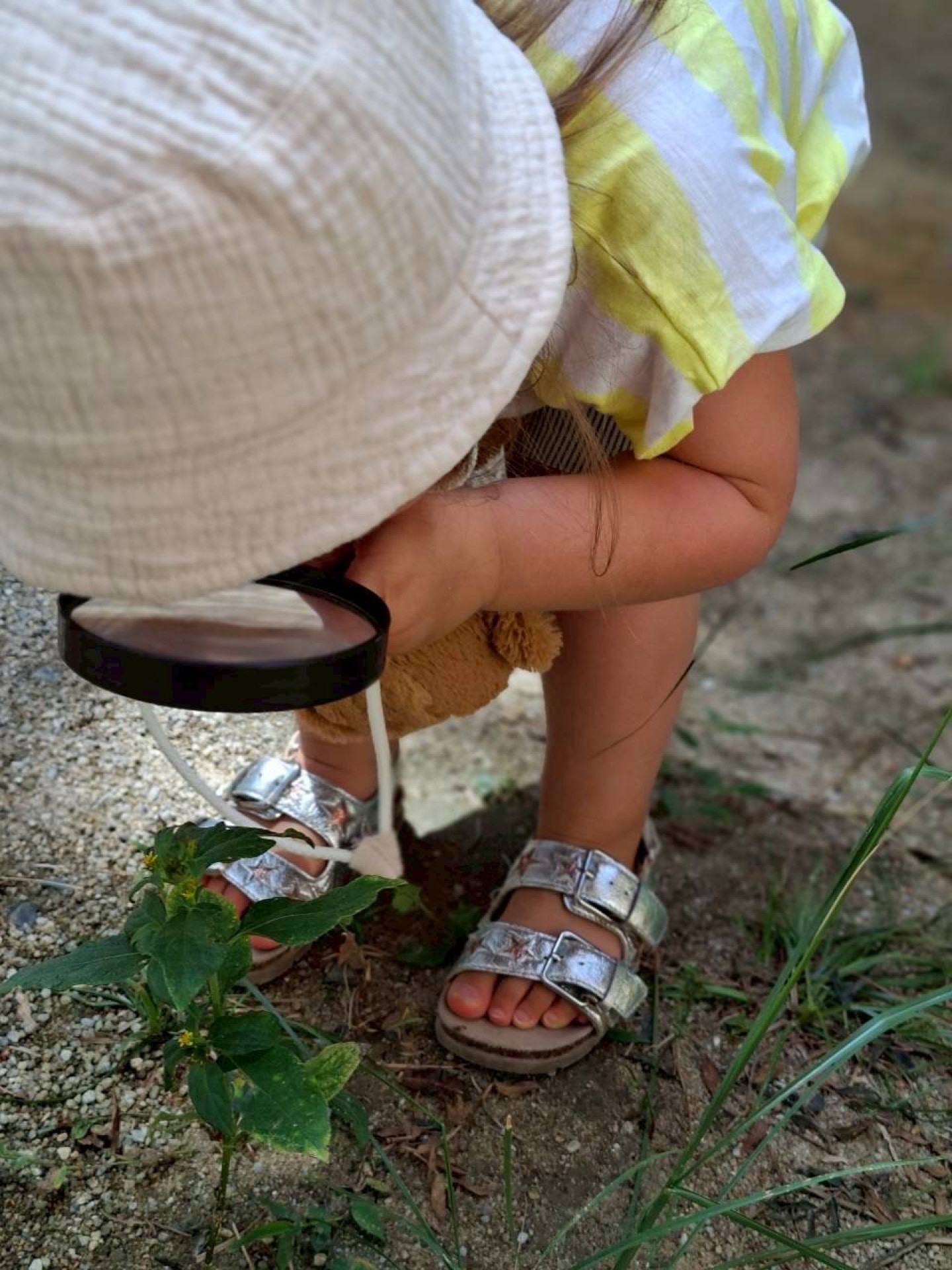
A Screen-Free Week, By Design
Bamboo Valley camps are completely screen-free. Not as a punishment — there's simply no gap in the day where a screen would fit:
- Mud kitchen and water play — the original sensory apps
- Gardening — planting, watering, harvesting, hands in soil daily
- Animal care — rabbits, goats, and chickens to feed and look after
- Making things — baking, painting, clay, crafts with natural materials
Most children stop asking about screens by day two. There's too much else going on.
Camp Details
- Mini Camp (ages 3–6): 13,000฿/week — gardening, animal care, baking, Waldorf painting, yoga, stories and circle time
- Explorer Camp (ages 6–13): 15,000฿/week — animal care, gardening, Muay Thai, cooking, sports and games, plus a Tuesday field trip and Thursday beach day
- Hours: 8:45am – 3:00pm, lunch and snacks included
- Where: Our 5,600 sqm palm plantation campus in Cherngtalay, Phuket
- When: Camps run during school holidays — Summer Camp 2026 runs June 29 – August 14, bookable by the week
The Science (For the Curious)
Gut microbiome: Children playing on biodiverse forest material showed significantly higher bacterial diversity and improved immune regulation after 28 days (Roslund et al., Science Advances, 2020).
Mycobacterium vaccae: This common soil bacterium activates serotonin-releasing neurons and modulates immune response (Lowry et al., Neuroscience, 2007).
Nature and stress: Green-environment play is associated with lower cortisol and improved heart-rate variability in children (Schmidt et al., Frontiers in Psychology, 2021).
Screen-time guidance: The WHO recommends no more than one hour of sedentary screen time per day for children aged 2–4, and less is better (WHO Guidelines, 2019).
Questions? WhatsApp +66 98 912 4218 or email info@bamboovalleyphuket.com
Bamboo Valley Phuket — Built by Parents, For Parents. Where childhood happens outdoors.
Experience Nature Learning at Bamboo Valley
Join our Nature Camp for outdoor exploration, immunity-building play, and joyful learning.